Cookie policy template
- Rows the cookie table needs
- 20
- Computed on this page from the inputs below
- Share of them set by somebody else, percent
- 70.0
- Computed on this page from the inputs below
- Other companies the policy has to name
- 6
- Computed on this page from the inputs below
- Table cells to fill, at name, purpose, party and lifetime
- 80
- Computed on this page from the inputs below
The response deadlines come from the statutes themselves: California Civil Code § 1798.130(a)(2) and Regulation (EU) 2016/679, Article 12(3), both read on 2026-09-06. Everything else in the builders is your own count and the arithmetic shown beside each figure.
Email me this result
We will send you these figures and a link back to them. One email, nothing else unless you tick the box.
20. Worked figures from a sample request, not yours: change every one of them.
Download the Cookie policy template worked example (CSV)
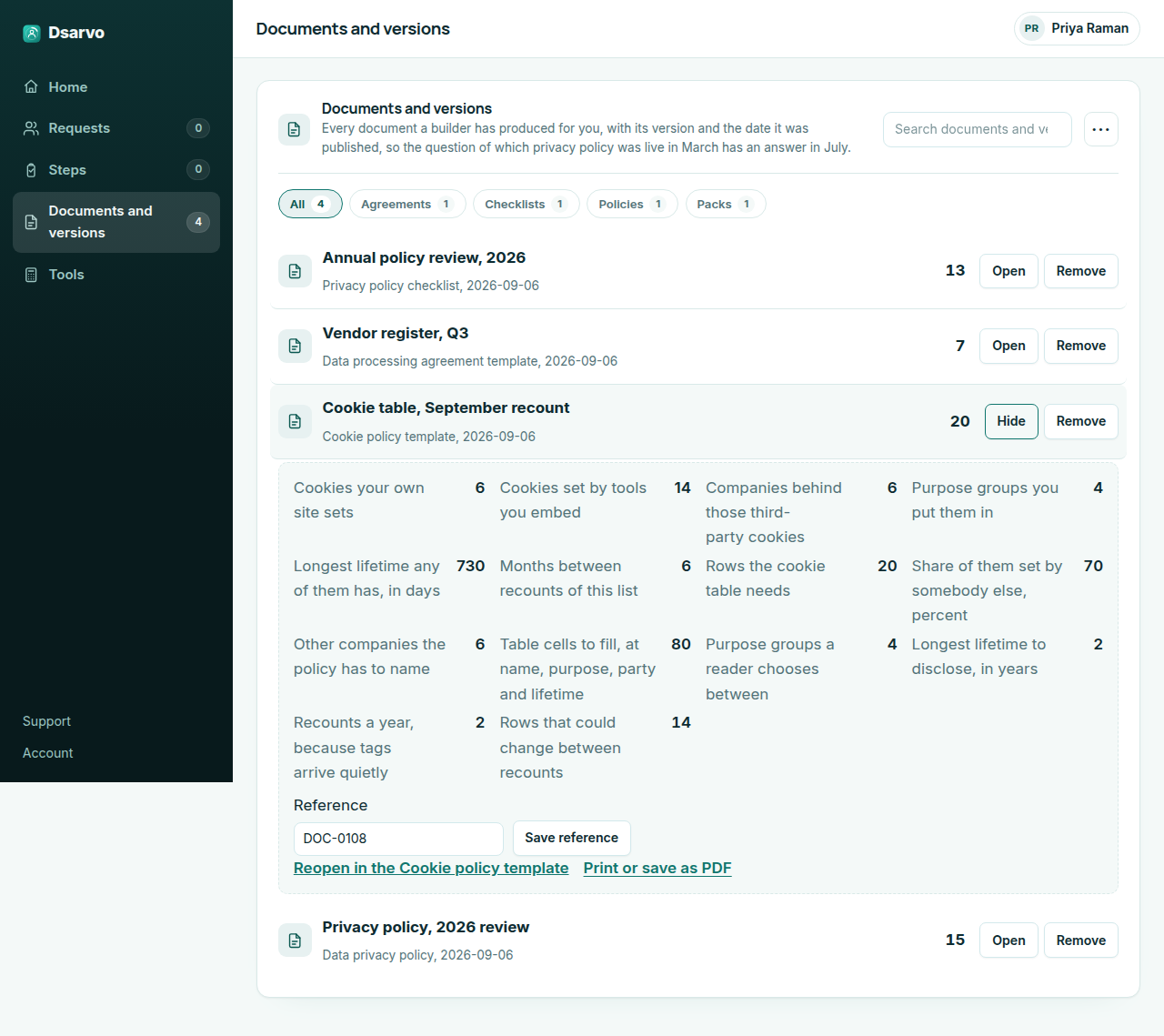
A cookie policy is a table, and the table is what people get wrong: it is written once against the cookies the site had that week, and then a marketing tag arrives and nobody updates it. This builder sizes the table. Put in the cookies your own site sets, the ones set by tools you embed, the companies behind them and the longest lifetime any of them has, and it prints the rows the table needs, the cells to fill and the share of your own cookie table that is somebody else's to change. The sample site has 20 rows, seven in ten of them third-party, 6 other companies to name and 80 cells. Change every figure: the defaults are a worked example, not yours.
Subject access requests: what people ask
How do I count the cookies I actually have?
Open the browser's developer tools on your own site, go to the storage panel, and read the list on a fresh visit and again after you log in or add to a basket. That takes ten minutes and it is the only count that is true today rather than true when the policy was written.
Why does the third-party share matter?
Because those rows change without you doing anything. An embedded video, a chat widget or an ad pixel can add or rename a cookie in an update, so the higher that percentage the more often the table needs recounting. The builder turns your recount interval into how many times a year that is.
Is this the cookie banner?
No, and deliberately not. This is the POLICY: the published page that lists what is set, by whom, for what and for how long. The banner, its wording and its consent record are a different job.
Where the constants in this tool come from
California Civil Code § 1798.140, definitions of sell and share.